FanFiction in the Mainstream: An Author’s Perspective

I recently read an article in regards to the rise of Dramione fanfiction and to the uninitiated it’s Draco Malfoy and Hermione Granger fan written stories that are quickly becoming mainstream, and being sold in chain book stores. I thought I would offer my thoughts as an author. This topic has become increasingly relevant as we are witnessing more fanfiction-to-publication success stores.
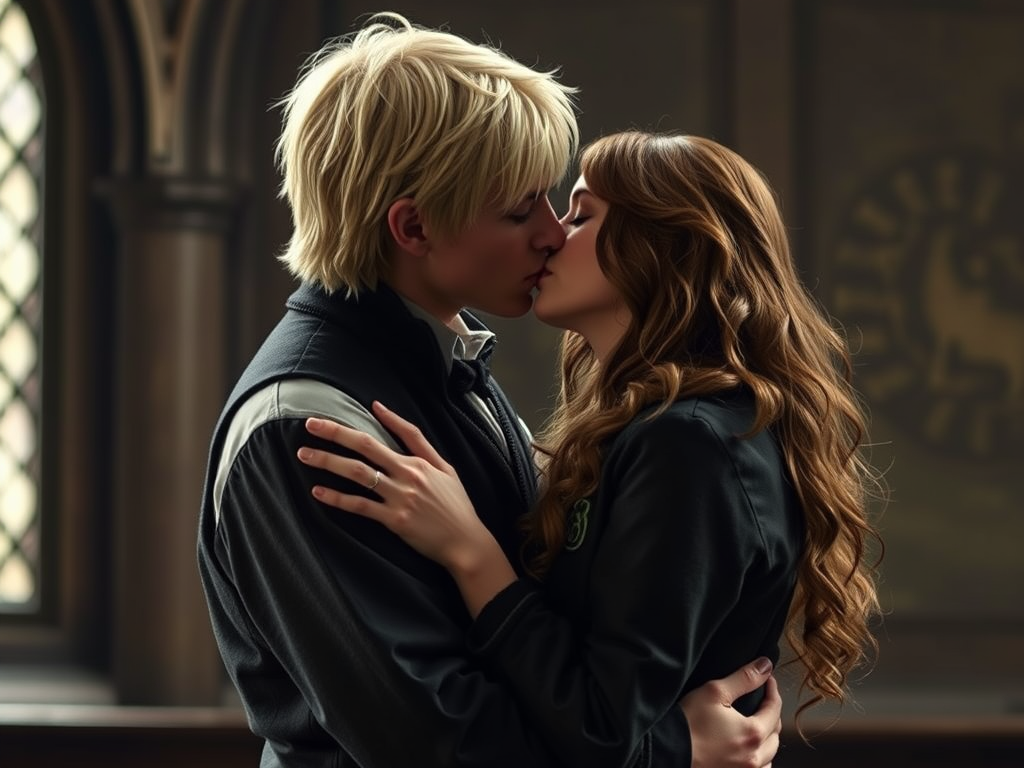
A close-up of a romantic kiss between two young characters in a fantasy setting, with a focus on their expressions and attire, suggesting a magical or school environment.

I will do my best to play devil’s advocate and attempt to examine the benefits and potential pitfalls of this trend.

I’ll begin with this: I have absolutely nothing against fanfiction. Period. I love it and to this day publish fanfiction and for the foreseeable future don’t plan to stop.

Fanficiton and I have quit a history. In the summer of 2010, during my mother’s first bout with a mysterious illness, it was during a late night search that I stumbled upon a lifeline I hadn’t known I needed. During the two weeks I stayed with her in the hospital, I dove into familiar worlds with beloved characters. This journey down this unfamiliar and odd path provided much needed comfort and escape during a very scary time.

During that same year of uncertainty and fear, I wrote my first ever fanfiction piece-and no, I will not be sharing the website where I publish my fanfiction nor my pen name. I’ve even written a blog post discussing how writing fanficition over the years made me a better writer, because it absolutely did (click here to read that post).

Now that I have that out of the way, let me begin.

As an author, I don’t take issue with other writers taking already-established worlds and characters and dreaming up alternate endings or putting characters together romantically who would never be involved in the original work—like Hermione Granger and Draco Malfoy. This kind of creative exploration serves several important purposes.

For the readers, it answers that great question: what if? It also serves to give characters a deeper dive granted the fanfiction characterization isn’t too far off the mark. It breathes new life into the storyline by exploring themes that weren’t necessarily important to the movement of then original storyline.

Now, for the writer, it is a playground of endless possibilities, as well as a great challenge. Many of the stories and characters are beloved. Any deviation that veers too far from what is realistic for that character(s), time period or setting, the reader will eviscerate you. Trust me, I speak from experience on that one. You also get immediate feedback and in some cases demand.

In the long term, books that were published years ago can potentially gain a new generation of readers as well as a renewed interest from those of us who grew up with a particular series.

The Issue and Broader Implications

What I do take issue with is when adaptations of someone else’s world and characters are then sold as standalone stories, with minimal changes made to disguise their fanfiction origins. I wouldn’t necessarily use the word “plagiarism,” but I feel as though we’re heading into a grey area where the original creator is somehow getting the middle finger.

Let me be clear about the distinction I’m making here. Finding inspiration in fanfiction and creating your own original story is one thing—and something I fully support. Many authors have drawn inspiration from existing works to create something genuinely new and transformative. But taking scenarios directly from a world someone else created—tweaking character encounters, introducing scenarios—and then packaging and selling it feels well….problematic.

I find the approach of not bothering to change anything aside from surface-level details troubling, and I disagree with this becoming an accepted route to publication. If this becomes the expected norm, then why should authors be bothered with creating whole new worlds and mythologies? Why waste time agonizing and aiming to bring something new to the table when you can re-heat leftovers?

Yes, I understand the argument that “there’s nothing new under the sun,” but there are concepts and approaches that authors have brought forth that are fresh but original, even when exploring universal themes and archetypes.

The Creative Development Question and Finding Balance

Can this new popular path potentially stunt creative growth?

When writers know they can take shortcuts by borrowing established worlds and character dynamics, are they missing out on the challenging but rewarding work of creating something entirely their own?

Building original worlds, developing unique character archetypes, and creating fresh mythologies is difficult work. It requires authors to dig deep, to find their own voice, and to contribute something genuinely new to the literary landscape. While I understand the appeal of the fanfiction-to-publication path, I worry it may discourage the more challenging but ultimately more rewarding creative work.

I want to be clear: I’m not calling for fanfiction to be banned or discouraged. The community serves valuable purposes, and the writing practice it provides is invaluable. What I’m advocating for is a clearer distinction between fanfiction as a creative exercise and practice ground, and professional publication that should meet higher standards of originality.

My concern is that we’re on a slippery slope where the line between fanfiction and original fiction becomes increasingly blurred in commercial publishing. If we accept that minimal changes to existing worlds and characters constitute “original” work worthy of publication and profit, where does it end?

What happens when aspiring authors see this as the easier path to publication and stop developing their own creative voices? What happens to the rich tradition of imaginative world-building that has given us everything from Middle-earth to Hogwarts to Panem?

Final Thoughts

Fanfiction is a wonderful creative outlet and training ground. I support it wholeheartedly in that context. But when it comes to commercial publication, I believe we should maintain higher standards for originality and transformation. Writers should be encouraged to use their fanfiction experience as a stepping stone to developing their own unique voices and worlds, not as a template to be slightly modified for publication.

The line needs to be drawn somewhere, and I believe it should be drawn at the point where creative borrowing becomes creative dependency.

I recognize this is a complex issue without easy answers. The literary world has always involved influence, inspiration, and adaptation. But in our rush to embrace new paths to publication, we shouldn’t lose sight of the value of genuine originality and the hard work of creating something truly new.

Fanfiction has its place, and it’s an important one. But so does original fiction that challenges authors to dig deeper, create more boldly, and contribute something genuinely their own to the literary landscape.

What are your thoughts on fanfiction going mainstream? Nothing to worry doubt? Or is this the beginning of the end?

The Weirdo wants to know!

Indie Publishing Expectations versus Reality-Part 4: Money Matters, the Hidden Cost of Self-Publishing

This is how my “go big or go home’ mentality drained an already strained budget. Let’s talk money.

A laptop on a desk displaying financial graphs and charts, alongside stacks of coins and a pen holder, suggesting a focus on budgeting and expenses.

Self-publishing isn’t easy, and it certainly isn’t cheap. I learned this lesson the hard way while publishing my debut novel, Taming Armand. What started as an exciting creative journey quickly became a financial wake-up call when my “go big or go home” mentality burned through my budget, one seemingly innocent expense at a time.

If you’re curious about the self-publishing journey and considering embarking on this wild ride, let me first walk you through some of my most costly mistakes—and how you can avoid making the same ones I did.

The Price of Indecision

My most expensive mistake wasn’t the result of a single purchase—it was due to lack of preparation. I made the cardinal sin of completing my entire manuscript without doing any research about the publishing process, whether traditional or self-publishing. I went in as ignorant as a newborn babe.

When I was finally ready to release my book into the world, my “research” consisted of watching several YouTube videos, and even those came embarrassingly late in the game.

This lack of preparation revealed itself in my publishing platform dilemma. From my limited research, I discovered Amazon KDP, Draft2Digital, and IngramSpark—three platforms consistently recommended by the content creators I followed. Instead of understanding the differences between them, I found myself paralyzed by choice, unsure which path would serve my book best.

The root of the problem was simple: I went into publishing with absolutely no plan. I had “pantsed” my novel (written without an outline), and I naively thought I could “pantser” my way through the publishing process too. But here’s what I learned the hard way—without direction, you have no aim. Without aim, you waste money on unnecessary expenses and miss opportunities to spend wisely on what actually matters.

Hidden Costs Add Up Fast

Let me break down where my money actually went. These costs cover both of my novels, Taming Armand and Bloody Endings, because the devil truly is in the details:

Professional Services

I went through Fiverr for book covers for both books, plus purchased a yearly subscription for a service that allows you to design your own book covers and create social media ads.

  • Fiverr covers: $150 (ebook and paperback versions)
  • Bookbrush yearly subscription: $246
  • Editing: $150 for developmental editing, $150 more for proofreading after making changes
  • Formatting: $120, then $80 more when I decided to add print versions

The “Just One More” Expenses

  • ISBN purchases: Started with one for $125 (Taming Armand), ended up buying a pack of 10 for $295 (during the publishing process for Bloody Endings)
  • Marketing materials: Business cards, bookmarks, banners—$200 total
  • Website and domain: $18/year that I forgot I was paying

What I Should Have Done Instead

Looking back, here’s the research-first approach I wish I’d taken:

Before Writing

  • Understand your genre’s market expectations
  • Research cover design trends in your category
  • Set a realistic total budget (including marketing)
  • Choose your publishing platform based on your goals, not popularity

During Writing

  • Build your author platform early (it’s never too early to start generating hype and an audience)
  • Connect with other authors in your genre
  • Start building an email list (this is something I’m currently working on—it’s a lot harder than people online make it seem)
  • Research editors and designers while you’re still writing

Before Publishing

  • Get quotes from multiple service providers
  • Understand the difference between developmental editing, copyediting, proofreading, and beta reading (I hired a beta reader through Fiverr for Bloody Endings and it made a world of difference)
  • Plan for both ebook and print formats from the start
  • Create a marketing timeline and budget

The Emotional Cost of Financial Stress

What the YouTube videos don’t tell you is how financial stress affects your creative confidence. Every unexpected expense made me second-guess my decisions. Should I have gone with the cheaper cover designer? Was that developmental edit really necessary? These doubts crept into how I felt about the books themselves.

The financial pressure also rushed my timeline. Instead of taking time to make thoughtful decisions, I found myself throwing money at problems to meet unrealistic self-imposed deadlines because I was trying to have something ready for Noir at the Bar. This led to expensive rush fees and less-than-optimal choices.

Note: Don’t rush and risk putting out subpar work by publishing before you’re ready. Looking back, I wish I had listened to my gut on this one and waited.

Building a Sustainable Self-Publishing Budget

For your first book, I recommend this approach (please adjust as needed—if you have a large budget, go for it, but if you’re working with limited funds, stay in your lane):

Essential Expenses (Budget 60% here)

  • Professional editing
  • Cover design
  • Basic formatting
  • One set of ISBNs (this is where I suggest you splurge, especially if you plan to self-publish more than one book)

Marketing and Promotion (Budget 25% here)

  • Simple website
  • Basic promotional materials (some websites offer this fairly cheap—WordPress does)
  • Initial advertising budget

Contingency Fund (Budget 15% here)

  • Unexpected revisions
  • Additional promotional opportunities (I’d also factor in author events where you can set up a table and sell books etc.)
  • Learn from mistakes early and don’t be afraid to pivot

The Long-Term Perspective

Here’s what I wish someone had told me: your first book is an investment in learning the process, not making money. The real return on investment comes from applying what you learn to subsequent books. With each book you publish, you’ll get better.

My expensive mistakes with Taming Armand taught me valuable lessons that saved me a couple hundred dollars on Bloody Endings. With book two, I had direction and aim. I planned before I spent.

The Bottom Line

Self-publishing is challenging and fun, but it doesn’t have to break the bank—though it will cost more than you initially think. The key is channeling that “go big or go home” energy into strategic planning rather than reactive spending.

My advice? Start with research, not with writing. Understand the full journey before you begin, and your wallet (and sanity) will thank you later.

Have you had similar experiences with self-publishing costs? The Weirdo wants to know—I’d love to hear your stories and your money-saving tips in the comments.

Show, Don’t Tell: A Writer’s Awakening

Three words changed how I write: “Show, don’t tell.” Before joining the Hoover Library’s Write Club, I’d never heard this fundamental rule that would reshape my approach to storytelling.

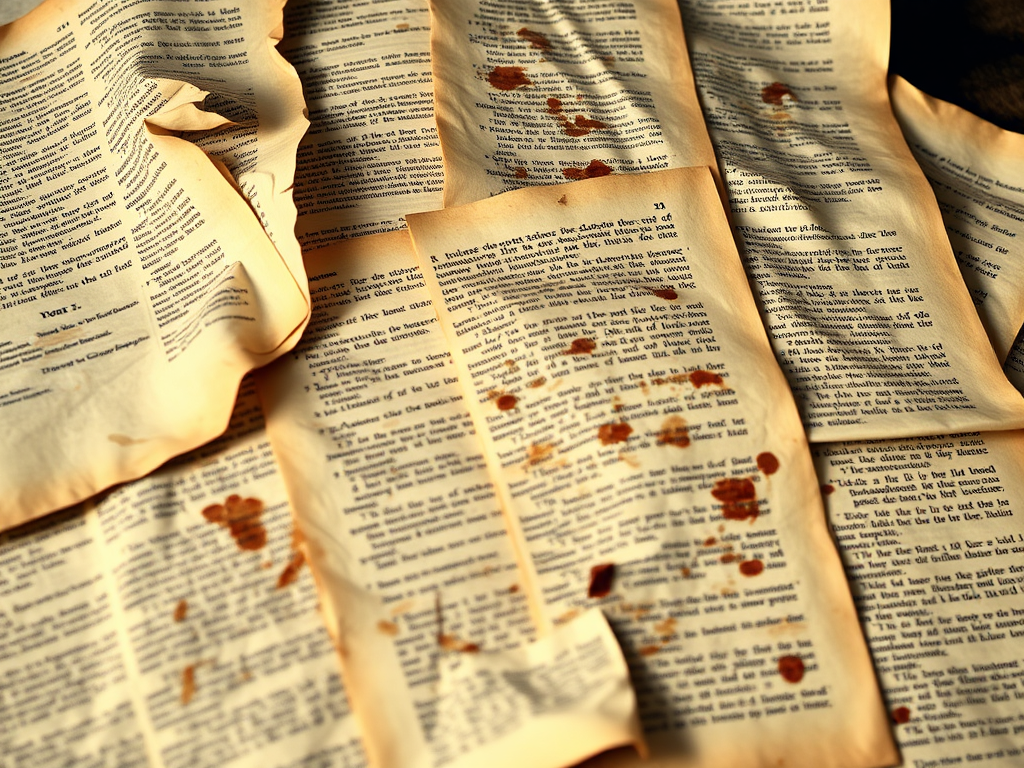
A collection of old, wrinkled pages with printed text, some marked with stains, suggesting a history of use and alteration.

When I first walked into that circle of folding chairs, clutching my manuscript like a security blanket, I had no idea how transformative the experience would be for my development as a writer. I thought I had it all figured out—after all, wasn’t writing just about pouring words onto paper? The more elaborate, the better?

One piece of feedback has stayed with me ever since: “Show, don’t tell.” At first, I was puzzled by this advice. What did that mean? My writing style involved throwing in everything but the kitchen sink. I reveled in immense descriptive detail and thought more was not just better, but the goal. Every sunset had to be “magnificent,” “breathtaking,” and every character’s emotion explicitly stated rather than demonstrated through action or dialogue.

I recall the moment the concept clicked. Instead of writing “Alicia was nervous,” I learned to show her fidgeting with the dimestore wedding ring, her voice catching mid-sentence, beads of perspiration forming across smooth blemished skin despite the cool air. The difference was night and day. Now, my readers could experience Alicia’s anxiety rather than simply being told about it.

This simply piece of advice not only transformed individual scenes, but my entire understanding of what good writing could accomplish. The art of story telling is an invitation, not a lecture. It should draw readers into experiences instead of merely informing them about events. 

I like to think I’ve turned from my wicked writing ways. Although I still battle one persistent habit that threatens to derail every writing session: the urge to edit while I write. 

Some old tendencies die hard—or not at all.

Putting Down the Metaphorical Red Pen

This internal editor remains my most formidable opponent. Picture this: I’m in the middle of what feels like a breakthrough scene, fingers flying across the keyboard, when suddenly that critical voice pipes up. “That sentence is clunky,” it whispers. “That word choice is terrible. Fix it now before you forget.”

My mind races faster than I can type, faster than I can think clearly. Ideas pile up like cars in a traffic jam while I’m stuck polishing a single paragraph to perfection, only to obsess over it hours later. It’s maddening. I’ll spend twenty minutes perfecting the opening sentence of a chapter, only to realize I’ve completely lost track of where the story was heading.

One thing that sharing taught me in the early years of Write Club was that first drafts are meant to be messy. They’re supposed to be imperfect, rushed, and full of placeholder phrases like “insert better description here.” The magic happens in revision, not in the initial pouring of raw creativity energy onto the page.

Yet knowing this intellectually and putting it into practice are two entirely different challenges. Even now, as I write this very sentence, I can feel the urge to go back and tinker with the previous paragraph. It’s an addiction of sorts.

The Liberation of Imperfection

Slowly, I’m learning to embrace what I call “productive messiness.” Some days, I force myself to write with my monitor brightness turned down so low I can barely see the words. Other times, I’ll set a timer and refuse to use the backspace key until it rings. These techniques sound ridiculous, but they’ve helped me push past the paralysis of perfectionism.

The most profound lesson from my writing group experience wasn’t just about showing versus telling—it was about trusting the process. Trust that the story will find its shape. Trust that awkward first drafts can and with some effort will become polished prose. Trust that sometimes the best writing emerges when we release control.

The journey from that nervous newcomer clutching her manuscript to someone who can actually finish a story has been anything but linear. There are still days when I catch myself editing the same sentence for the tenth time, days when “show, don’t tell” feels like an impossible mountain to climb.

But there are also days when the words flow like water, when scenes come alive on the page, when I can feel readers leaning in because they’re not just reading about characters—they’re experiencing the story alongside them. Those are the days that make every frustrating writing session worth it.

The red pen will always be there, waiting to interrupt the creative flow. The key is learning when to pick it up—and more importantly, when to set it down and just let the story unfold.

How has famous word ‘Show, don’t tell’ impacted your writing journey? Is it something you follow? Or dismiss as antiquated approach to writing? The Weirdo wants to know!