30k in 30 Days: An Indie Author’s Challenge

Alright, taking another brief pause on the Indie Publishing Series to issue a challenge, albeit, it is for myself. But please feel free to join in and revisit this post to provide an update on your progress.

A thoughtful young woman with natural curly hair sits at a table, holding a pen and looking intently at a notebook, embodying a moment of inspiration and creativity.

As I write this, I find myself in one of two camps:

  1. I have officially crossed the blurred line between insanity and sanity
  2. I have reached another level in my writing journey where I want to push myself and put out another book this year

In my twisted sense of humor, I’m good with number 1. (Remember, I’m a huge Edgar Allan Poe fan, so creeping into insanity isn’t all that unappealing—just being honest.) But I’ll believe that it’s more so number 2.

The Goal and The Why

The mission is to write a minimum of 30,000 words of a manuscript by the end of August.

Why? Honestly, I believe that I have been lazy. Coasting. Using every excuse and then some to do the bare minimum. I say I want to do this full time, and yet the amount of time I put forth in writing is less than four hours per week.

Simply put: it’s pathetic. My attempts at building my writing career into what I know it can be are laughable. I’ve been collecting excuses instead of creating content, and it’s time for that to change.

Criteria for Success

Initially the ideas was to write 30k of my latest manuscript but I did tweak things a little bit. Now, there’s no hard limit to this 30K challenge, and what I mean by that is I’m giving myself some wiggle room.

The goal is to write 30,000 words for the month of August—period.

The reason I give myself this caveat is that I have several short stories in question that will add to that collective word count. They’re already in progress and deserve to be part of this challenge. They are deserving of the same level of effort at my manuscript.

Now, The Approach

I’m treating this challenge seriously at the same time embracing the natural chaos of the creative process. I am well aware some days might produce solid material with the scenes flowing like rushing rivers. Then other days might be a bit, less say stagnant.

Mainly this challenge is about consistency showing up when there is no inspiration or motivation.

This isn’t just about hitting a word count—it’s about building sustainable writing habits and proving to myself that I can commit to the craft with the dedication it deserves.

Why This Matters

This 30K goal about more than word count—it’s about proving to myself that I can stop treating my writing like a side hobby.

Challenges that push us outside our comfort zone are usually exactly what we need. I’d rather attempt something ambitious and learn from the process than continue making excuses for why I’m not progressing. Excuses why nothing is being produced.

If I happen to lose a bit more of my sanity along the way? Well, most writers are a little eccentric anyway.

Moving Forward

So here I am, ready to commit to this challenge and see what happens. This is about more than just hitting a number—it’s about developing the discipline and consistency that a serious writing career demands.

The goal is clear: 30,000 words in 30 days. No more excuses, no more coasting. Just work that needs to be done.

Time to get started.

Sound off in the comments, will you too accept the challenge? The Weirdo wants to know. 

Flying Blind: A Pantser’s Thoughts

There’s a moment in every writer’s journey when they have to choose between control and surrender. When faced with this conundrum, do you grip the steering wheel tighter? Or do you slide over to the passenger seat and see where the ride takes you?

For me, that choice came about 1,500 words into what I thought would be a simple, cheesy romance posted for free on Inkitt. Little did I know, my characters had other plans—even the ones that had yet to make their presence known.

I have a confession: I am a pantser. Yep. I go into every story flying blind. I start with a character, a problem, and often absolutely no direction. But I don’t panic. I let the characters decide where to take me.

When I write, I like to think of myself as a scribe—but a scribe with unprecedented access to the characters’ inner thoughts, secrets, desires, and untold history. Nothing is hidden from me.

Now, this “flying blind” approach isn’t without challenges. Sometimes I hit a wall, and not for the reasons you might initially expect.

With Taming Armand, I hit a wall when the story’s direction completely shifted. I initially jumped on Inkitt intending to write a cutesy love story—something a little erotic and, well… cheesy. But around 1,500 words in, the characters hijacked my plans. After chapter one, the secret history of how Armand’s father became alpha and the complex dynamics of one-sided sibling rivalry took over, kicking me out of the driver’s seat. I was no longer controlling what played on the radio.

I found myself writing Taming Armand thinking, “Wow, I didn’t expect it to go this way,” or clutching my pearls at scenarios that unfolded naturally as I continued writing. It was no longer my story—it belonged to Armand, Amelia, Maximillian, and the rest. I, the scribe, had moved to the periphery, becoming merely a spectator who wanted to record everything I’d seen and heard.

Now, I’m not prejudiced against planning. I see the merits in outlining, but as someone who has tried to plan stories, I have to say it’s truly not for me. What was supposed to be a simple outline quickly ballooned into twenty pages of actual story. During that planning exercise, the little bit I did outline was never referenced (honestly, I think I lost it entirely).

Then there was the time I sat down to write a story with a specific ending in mind—something happy. I wanted to step outside my comfort zone and write something, well… uplifting. Instead, the character took me down a dark but humorous path of murder, flaying, and repressed sexual desires. Trust me, I didn’t see any of that coming, at least not for this particular story.

It was with this story that I really evaluated what type of writer I was and am. More importantly, it gave me the courage to embrace who I am as a writer. I don’t write with outlines. An idea comes to me from the ether, I grab hold of it, and let it lead me wherever it wants to go. In simpler, less fluffy terms: I’ve accepted that most writing advice articles aren’t very useful to me because of my approach to storytelling. I’ve learned not to bend myself to fit what a writer is “supposed to do” or how they’re “supposed to approach” story or character development. I’ve learned not to throw the baby out with the bathwater, so to speak.

Do I think my writing life would be easier if I planned? Probably. I’d likely have a higher chance of meeting writing deadlines. But flying blind is where I’m most comfortable, and I feel I do my best work. I’m a better writer when I sit down with no expectations other than getting started. After that first line, the characters take over, and I let them run wild.

Are you a planner or a pantser? Or do you prefer a mixture of both?

The Weirdo wants to know!

Indie Publishing Expectations versus Reality- Part 3: The Editing Gauntlet

This is Part 3 of the “Indie Publishing Expectations vs. Reality” series. Be sure to check out Part 1: Book Covers and Part 2: Knowing the Difference Between Writing Alone and Going It Alone of the series.

I continue with this series on indie publishing, and tackle what I would consider one of the harder if not hardest aspects of writing—one that we’ve all either 1) struggled with, 2) thoroughly enjoyed, 3) hired someone else to tackle that messy piece, or 4) pointed two fingers (I think you know which ones) at the editing process and hit the publish button.

However you handle the arduous process of editing, I would highly encourage you to avoid number four at all costs. Even if you’re averse to the editing process or just anxious to get something published, I would advise—and beg—please give it at the bare minimum a once-over.

I cannot tell you have many fan fiction pieces and even some books that I’ve read where it was evident no one edited a darn thing.

I digress.

I remember the moment I typed “THE END” on the first manuscript I ever completed. The euphoria was intoxicating. I’d done it—I’d written a book! Finally. That one word summed up the initial four years of my path to publication.

In my mind, the hardest part was over, and in about one week (gross underestimation by the way) I would have it published. Only thing left to do was get a banging cover a quick pass through and BAM! I’d be holding my first book.

Now, I’ll jump into my battle with editing.

The Rush to Publish

The book was written and I was anxious to get it out and have copies ready for the 2024 Birmingham Noir at the Bar. All of the other authors had a book either out or coming out, and I needed one out too. (I will interject here, it is a bad, horrible idea to compare yourself to other authors-period! That is the quickest way to end up at depression’d door. Just trust me on this one).

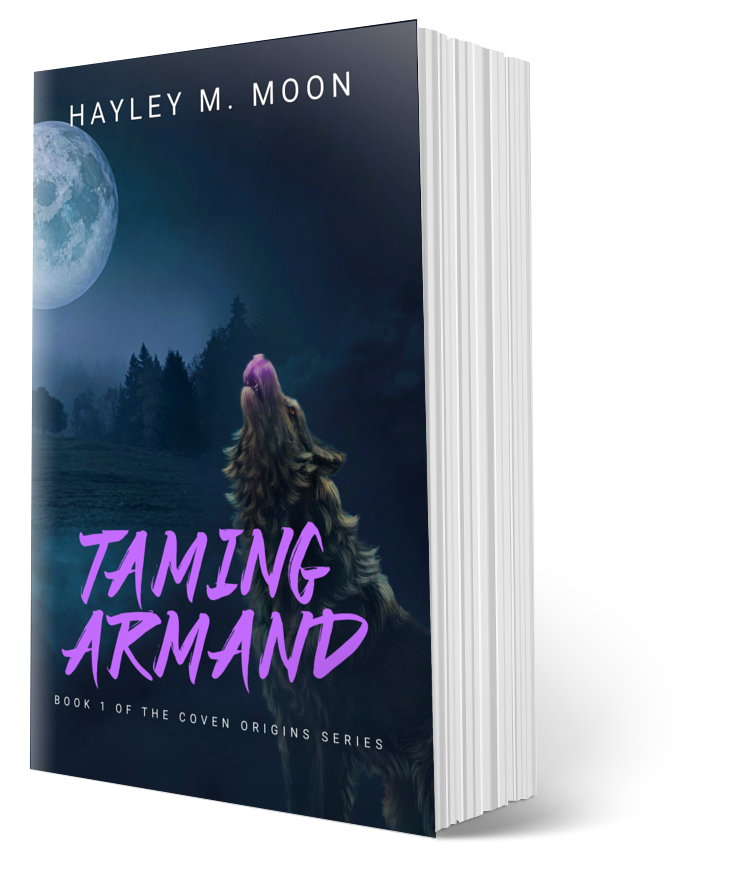
Book cover for 'Taming Armand' by Hayley M. Moon, featuring a wolf under a full moon with a dark forest background.

That was over a year ago, and I have learned a tremendous amount since then. I will admit that with my first novel (Taming Armand Book 1 of the Coven Origins Series), it only went through one—yes, I will repeat that—one round of major edits, and those were done by… me.

Yep. If you’re a writer, teacher, blogger, etc., then I’m sure you chuckled and probably had to do a quick re-read. But no, your eyes are not deceiving you. I didn’t realize how much of a horror that book was until it was published.

If you’re new to indie publishing, let me save you some heartache: your first draft isn’t your book. Not even close. It’s the raw material your book will eventually be carved from. Understanding this distinction—and the editing gauntlet that transforms one into the other—might be the most important reality check you’ll face as an indie author. That was the case for me.

With Taming Armand, it was and still is my baby. It was the first testament that I could do it—that I had started carving away at my dream of becoming a bestselling author. It wasn’t until Taming Armand had been on the market and I had that first copy in my hands and started to read it that I began to understand where I went wrong—and I had gone wrong way before I even completed the manuscript.

I Was a Victim of the First Draft Fantasy

Even before I began to take my writing seriously, I had a romanticized view of the writing process with little to no thought given to the editing process. But what little thought I did give to editing was something like this:

  1. Start the book, finish the book. Celebrate.
  2. Take a brief breather. Read through what you have written. Fix the obvious typos and sentence structure.
  3. Adjust a few sentences for flow. Maybe even add a few here and there to spice things up a bit.
  4. Take another breather. Proofread it yourself. Send to a proofreader for final polish (ended up not doing this because I was in a rush to GET IT OUT!).
  5. Add the finishing touches and voilà! Sit back and watch the five-star reviews (and the royalties) roll in!
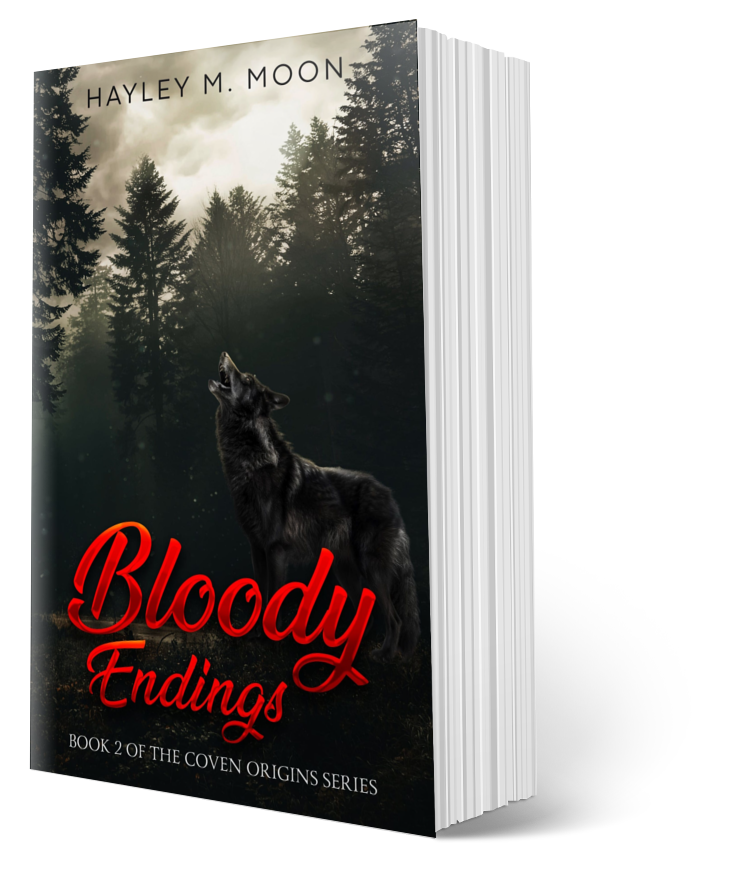
A book cover for 'Bloody Endings', Book 2 of the Coven Origins Series by Hayley M. Moon, featuring a dark forest backdrop and a howling wolf.

I thought editing was like washing a car—a quick rinse to make something good look shiny and new. I had no idea with Bloody Endings: Book 2 of the Coven Origins Series that I was about to enter what I would call “the editing gauntlet”—a grueling but essential process that would completely transform my work into a final form that I was very proud of.

Learning from Mistakes

Several months after Taming Armand was on the market, it had to undergo some serious rework. The first release was what it looks like when you rush to publish—when you release your baby into the world before she or he is ready. I was sure not to repeat that with the second one.

Going into manuscript two, the first draft fantasy was over and I went in knowing there was some seriousness that needed to be taken with not just the writing but the editing portion as well.

Book two underwent multiple rounds of edits but I still felt like more could have been done and at some point I had to call it or else the plot would have been lost.

Another difference between book one and book two was I actually took joy in the entire process. I was able to give the attention to book 2 that frankly I should have given to book one. I outsourced what I didn’t know how to do. I hired someone for the cover. I hired an editor and a beta reader.

What I will say in a nutshell about the editing process is that it’s tough. It’s necessary, and it is one process that no writer should go through alone. After the first pass-through by you, get someone else (I would recommend a professional—yes, indie publishing can be a bit pricey, but I learned to cut corners where possible and budget accordingly).

Your Turn

What are some mistakes you have made during the editing portion of your manuscript? Did you rush it? Put both middle fingers up to the process altogether? Or were you blessed to have a team to help guide you through the editing trenches?

Sound off in the comments—the Weirdo wants to know.

Until next time!