Indie Publishing Part 2: Expectations versus Reality – Knowing the Difference Between Writing Alone and Going It Alone

When I first decided to become an author, I thought I understood what I was signing up for and that it would be fun, and in no time I would be rich!

I’d write my book in solitude (which is something that appealed to me. The lonely genius burning the midnight oil with a beloved pet as their only companion has been something that I have inspired to for a long time. (Haven’t decided whether this is an unhealthy aspiration or not but I digress.)

I thought, “I’ll publish the book myself—how hard could it be?” The plan was simple: build my author career on my own terms and, most importantly, maintain control over my own destiny. After all, who doesn’t crave that sense of control, or at least the comforting illusion of it?

I was ready to embrace what I imagined would be the writer’s life: peaceful isolation paired with creative independence. Little did I know what lay ahead.

What I didn’t realize was that there’s a massive difference between “writing alone” and “going it alone”. I believe as an indie authors and/or publishers this is something we all contend with at some point on the journey. Confusing the two nearly derailed my entire writing journey.

Writing Alone: Beautiful Solitude

Writing alone is exactly what it sounds like—the quiet, focused act of putting words on the page. It’s you, your thoughts, and the story unfolding in your mind. This part of indie publishing lived up to every expectation I had. There was pure creative flow. There were no meetings, no compromise, no committee decision about character motivations and no debates on whether is this or that too much.

I had complete control.

I decide when my protagonist and antagonists speak. I shape the world and whether a plot twist stays or goes. Then there’s the flexible schedule. Whether I write at 5am or midnight, in bed or at the local overpriced coffee shop is of no one’s concern but my own.

Mostly importantly there are no deadlines, except the ones that I set. Then there’s the authentic voice; the story emerges exactly as it has been envisioned without outside influence (which can be for the good or the bad; at times a fresh set of eyes are helpful, I am willing to admit).

This solitude isn’t just pleasant—it’s essential. The best writing happens in that quiet space where you can hear your characters’ voices and feel the rhythm of your prose. I protect this time fiercely, and it remains my favorite part of the entire writing journey.

But here’s the thing about illusions, especially the beautiful ones, is that it lures you in and before you know it the hooks are embedded deep.

Going It Alone: The Isolation Trap

Now here’s where expectations and reality collided. I thought the entire indie publishing journey would be this peaceful, solitary experience. I thought the process would be ordered and all I had to do was hit each step along the way and end up at this fabulous destination. I imagined myself as a lone wolf, handling everything from manuscript to marketing with quiet confidence and complete self-reliance.

The reality? Going it completely alone is not just lonely—it’s counterproductive and dare I say, devastating.

The Learning Curve

When you go it alone, every mistake becomes a costly lesson learned the hard way:

– I spent a week playing around on BookBrush, designing a cover that looked cute, artistic but didn’t signal the urban fantasy genre.

-My back cover blurb was lacking.

-I chose keywords based on what I thought sounded impressive, not what readers actually searched for when looking for books.

Each of these mistakes could have been avoided with input from other indie authors and publishers who’d already navigated these waters.

Lesson learned.

I now have a tribe (albeit small) of writers and authors that have undergone a similar journey or that have taken a different path (more traditional route) or write purely to submit to anthologies.

So, I want to know, can you relate?
A Blog…But Not Really ;)

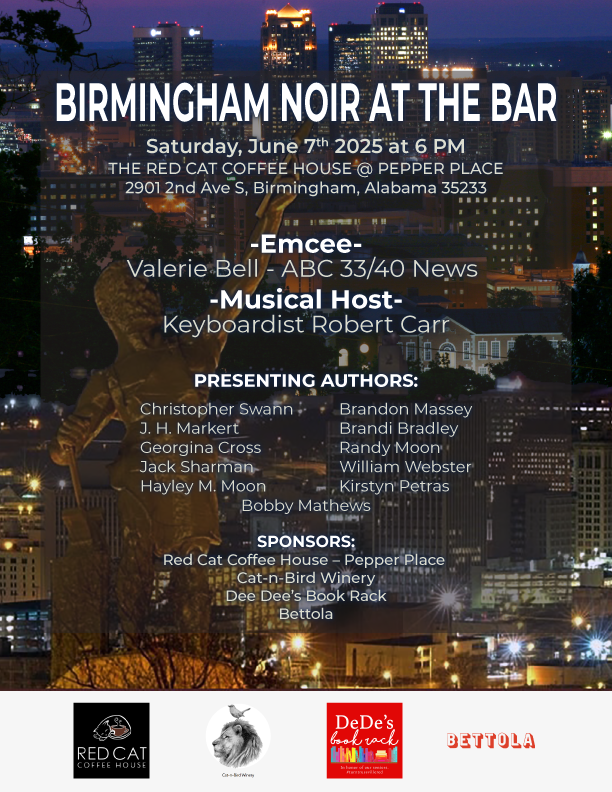
I won’t be posting part 2 of my “Indie Publishing” series. Currently, I’m deep in the writing and editing trenches, preparing a piece for this Saturday’s Birmingham Noir at the Bar (June 7th at 6pm).

As I prepare to take the stage and read my story, I find myself reflecting on how far I’ve come as a writer-turned-author. What started as a little side hobby—an emotional outlet—has become such an important part of my life. Writing has given me something to look forward to, a community, friends, and yes, I’ll sound cheesy here: a sense of purpose.

My mind keeps returning to the first Noir at the Bar I ever attended. Whether it was accident or fate is hard to say, but I had no intention of going to that event six years ago. I called my dad, and we decided, why not? We work hard—we work a lot—so why not take a few hours to let our hair down?

We met at the Wild Roast coffee shop, and for two hours, we had our minds completely blown. I sat there in wonder, thinking about my own writing and asking myself: if they can do it, why can’t I? What’s stopping me… besides me?

The next day I was on a high that I still cannot describe. I broke out old, worn journals and combed through all my writing files stashed away on my HP. I had a fire; I started writing again—and unlike before, I began to take writing seriously. I am taking it seriously.

I feel as if I’m no longer floundering. Now, in my early thirties, my feet are finally on solid ground.

It was a spur-of-the-moment decision, and one that taught me you have to take chances in this life because you never know what’s waiting on the other side. It can be bad, or it can be a whole lot of good.

Indie Publishing Part 1: Expectations versus Reality-Book Covers

This will kick off my new Indie Publishing series where I discuss being an Indie author and what I wish I knew before I got started. This will be the first of a little multi part blog post where I discuss a few aspects of my publishing journey so far.

I went into the publishing industry green-I mean fresh sweet pea green-so of course my views were, to say at a minimum, unrealistic. Naive. Wishful thinking. You get the picture.

I was under the impression the hardest part of the process was, well, writing the book. In my opinion, although it’s not without difficulty, that is the easiest part and one I could do on repeat.

I thought all I had to do was write the book and then everything would easily fall into place and voila! I would be a famous author with royalties pouring in, a pick for Oprah’s book club, and then I could quit my job and tell the man where to stick it! While getting settled into a small cottage with a maze nestled on a lake! LOL!

None of this has come true-at least not yet-and it wasn’t until after Taming Armand was written I realized…wait, that’s not it? There’s still more to do?

Book Covers

Although one of the things I find most enjoying about the publishing process is playing such a huge part in the cover design. Thing about being an indie author is that I have the first and last say on the design-and font. This has also been the part of the process that has caused my anxiety to rear its ugly head on a few occasions.

Let’s start with you can choose anything. A blessing and a curse. Especially for someone that came into the indie publishing game with no idea of what she was doing.

After an hour or two at YouTube University, I learned a little thing about genre specific covers and genre expectations. Going into the process, I never thought about being genre-specific and whether it aligns with what’s hot in that genre at the time of publication. Naively, I thought the only goal of book cover design was to create a pretty, eye-catching cover. But the main goal as an author is to move product! You don’t want your book to get overlooked simply because the cover doesn’t fit genre expectations.

Let’s not start on the font.

Before I outsourced outsource cover design to someone that does it for a living, I gave it three attempts. It was fun, but stressful. Tedious. At times I wasn’t sure on which direction to go, and as for the urban fantasy genre in which Taming Armand and Bloody Endings both fit into with a tinge of paranormal romance, and black magic (just an FYI if you’re into that sort of thing), I thought many of the covers where cheesy.

From first glance at the covers, the books would not be my first choice. Nor did I want my cover to blend in, but I’ve learned in order to standout you have to first fit in.

Now let’s get to the nitty gritty and talk fonts! I didn’t know there were certain fonts that cannot be used because they’re trademarked or registered or whatever. But yeah, it blew my mind!

Also, there are genre specific fonts and these can make or break your cover. Just because a font is pretty doesn’t mean it’s legible. Too much flair then we have entered into romance or high fantasy territory. That’s not a bad thing, but if you write street, gritty crime- then you may find yourself in a bit of a pickle.

So my expectations for book cover design was that it would be fun. As for font design and selection, I had no expectations because it didn’t even register that thought had to be put into something, that prior to venture into publishing, I thought was insignificant, mundane.

Indie publishing has given me a new respect for publishing houses and small presses. It takes a lot of oil to get the machine that is a book ready. There are a lot of little pieces and players (if you are fortunate to have a team) working together to create the finished product waiting to be chosen on a shelf near you.