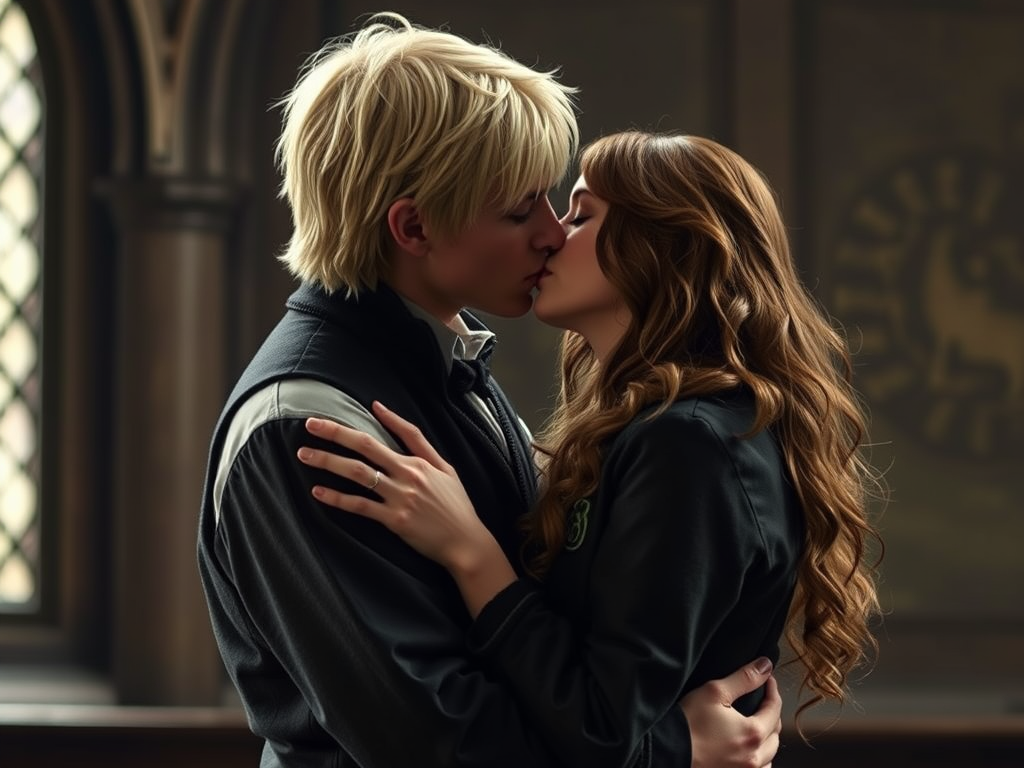
I recently read an article in regards to the rise of Dramione fanfiction and to the uninitiated it’s Draco Malfoy and Hermione Granger fan written stories that are quickly becoming mainstream, and being sold in chain book stores. I thought I would offer my thoughts as an author. This topic has become increasingly relevant as we are witnessing more fanfiction-to-publication success stores.
I will do my best to play devil’s advocate and attempt to examine the benefits and potential pitfalls of this trend.
I’ll begin with this: I have absolutely nothing against fanfiction. Period. I love it and to this day publish fanfiction and for the foreseeable future don’t plan to stop.
Fanficiton and I have quit a history. In the summer of 2010, during my mother’s first bout with a mysterious illness, it was during a late night search that I stumbled upon a lifeline I hadn’t known I needed. During the two weeks I stayed with her in the hospital, I dove into familiar worlds with beloved characters. This journey down this unfamiliar and odd path provided much needed comfort and escape during a very scary time.
During that same year of uncertainty and fear, I wrote my first ever fanfiction piece-and no, I will not be sharing the website where I publish my fanfiction nor my pen name. I’ve even written a blog post discussing how writing fanficition over the years made me a better writer, because it absolutely did (click here to read that post).
Now that I have that out of the way, let me begin.
As an author, I don’t take issue with other writers taking already-established worlds and characters and dreaming up alternate endings or putting characters together romantically who would never be involved in the original work—like Hermione Granger and Draco Malfoy. This kind of creative exploration serves several important purposes.
For the readers, it answers that great question: what if? It also serves to give characters a deeper dive granted the fanfiction characterization isn’t too far off the mark. It breathes new life into the storyline by exploring themes that weren’t necessarily important to the movement of then original storyline.
Now, for the writer, it is a playground of endless possibilities, as well as a great challenge. Many of the stories and characters are beloved. Any deviation that veers too far from what is realistic for that character(s), time period or setting, the reader will eviscerate you. Trust me, I speak from experience on that one. You also get immediate feedback and in some cases demand.
In the long term, books that were published years ago can potentially gain a new generation of readers as well as a renewed interest from those of us who grew up with a particular series.
The Issue and Broader Implications
What I do take issue with is when adaptations of someone else’s world and characters are then sold as standalone stories, with minimal changes made to disguise their fanfiction origins. I wouldn’t necessarily use the word “plagiarism,” but I feel as though we’re heading into a grey area where the original creator is somehow getting the middle finger.
Let me be clear about the distinction I’m making here. Finding inspiration in fanfiction and creating your own original story is one thing—and something I fully support. Many authors have drawn inspiration from existing works to create something genuinely new and transformative. But taking scenarios directly from a world someone else created—tweaking character encounters, introducing scenarios—and then packaging and selling it feels well….problematic.
I find the approach of not bothering to change anything aside from surface-level details troubling, and I disagree with this becoming an accepted route to publication. If this becomes the expected norm, then why should authors be bothered with creating whole new worlds and mythologies? Why waste time agonizing and aiming to bring something new to the table when you can re-heat leftovers?
Yes, I understand the argument that “there’s nothing new under the sun,” but there are concepts and approaches that authors have brought forth that are fresh but original, even when exploring universal themes and archetypes.
The Creative Development Question and Finding Balance
Can this new popular path potentially stunt creative growth?
When writers know they can take shortcuts by borrowing established worlds and character dynamics, are they missing out on the challenging but rewarding work of creating something entirely their own?
Building original worlds, developing unique character archetypes, and creating fresh mythologies is difficult work. It requires authors to dig deep, to find their own voice, and to contribute something genuinely new to the literary landscape. While I understand the appeal of the fanfiction-to-publication path, I worry it may discourage the more challenging but ultimately more rewarding creative work.
I want to be clear: I’m not calling for fanfiction to be banned or discouraged. The community serves valuable purposes, and the writing practice it provides is invaluable. What I’m advocating for is a clearer distinction between fanfiction as a creative exercise and practice ground, and professional publication that should meet higher standards of originality.
My concern is that we’re on a slippery slope where the line between fanfiction and original fiction becomes increasingly blurred in commercial publishing. If we accept that minimal changes to existing worlds and characters constitute “original” work worthy of publication and profit, where does it end?
What happens when aspiring authors see this as the easier path to publication and stop developing their own creative voices? What happens to the rich tradition of imaginative world-building that has given us everything from Middle-earth to Hogwarts to Panem?
Final Thoughts
Fanfiction is a wonderful creative outlet and training ground. I support it wholeheartedly in that context. But when it comes to commercial publication, I believe we should maintain higher standards for originality and transformation. Writers should be encouraged to use their fanfiction experience as a stepping stone to developing their own unique voices and worlds, not as a template to be slightly modified for publication.
The line needs to be drawn somewhere, and I believe it should be drawn at the point where creative borrowing becomes creative dependency.
I recognize this is a complex issue without easy answers. The literary world has always involved influence, inspiration, and adaptation. But in our rush to embrace new paths to publication, we shouldn’t lose sight of the value of genuine originality and the hard work of creating something truly new.
Fanfiction has its place, and it’s an important one. But so does original fiction that challenges authors to dig deeper, create more boldly, and contribute something genuinely their own to the literary landscape.
What are your thoughts on fanfiction going mainstream? Nothing to worry doubt? Or is this the beginning of the end?
The Weirdo wants to know!

 hayleymoon.com