Finding Your Unique Writer’s Voice

Writers often find inspiration in their favorite authors but must differentiate between inspiration and imitation to succeed. Initially emulating others can stifle creativity, but finding one’s unique voice is essential. Embracing authenticity leads to fulfilling storytelling, allowing writers to express themselves without the burden of replicating someone else’s style.

As writers, we naturally gravitate toward particular styles that inspire us. We all have our favorites—those authors whose words resonate so deeply that we can’t help but be influenced by them. But there’s a fine line between inspiration and imitation, and learning to recognize that difference can make or break your writing career.

In the beginning, this was my struggle as I moved toward taking a more serious approach to my writing career. I attempted to become a modern-day version of Edgar Allen Poe (my absolute fave by the way). I thought, “This worked well for him-albeit posthumously-so surely this will benefit me as well. So why not give it a try?”

I’ve since learned that although emulating your favorite author is how many writers start out, it rarely works in the long run. No carbon copies allowed. I became so caught up in trying to use another writer’s formula that I became stifled and stagnant, unable to complete my own works.
Close-up of a young woman with short dark hair and large expressive eyes, wearing a black top and a hoop earring, gazing thoughtfully towards the viewer.
In my frustration that I was doing it (writing) wrong, I almost gave up. Imitation is not the sincerest form of flattery it is a crutch.

Developing Your Voice

As aspiring writers, we must develop our own voices. In this digital age, we have tools, platforms, and exposure opportunities that our predecessors never dreamed of. But this blessing is also a curse. The waters have become muddied with self-appointed gurus and experts, making the landscape confusing and, at times, daunting.

Anyone with a laptop and internet access can post whenever and whatever they want. It’s easy to find yourself drowned out by the noise of fan fiction and poorly crafted writing. (I have nothing against fan fiction—my first online posts were Harry Potter fanfics, some of my best work, actually, though they’re in desperate need of editing.)

How I Found My Voice

So how did I find my voice?

I stopped trying to reinvent the wheel and began to write what felt natural to me. I stopped trying to get into the minds of King, Poe, and Flynn and began to write the sort of stories that I would love to read. I create the characters that I found fascinating, and every one of them embodies a bit of me.

I also stopped trying to force myself into a specific genre. Now, as someone relatively new to the writing game, I don’t know if this approach is “correct” or not, but it has worked for me thus far and allowed me to get back to what matters most: the story.

I feel I’ve freed myself and truly opened up to a world of great possibility. And that’s what finding your voice really means—giving yourself permission to write authentically, without the pressure of living up to someone else’s legacy.


Your turn. Have you struggled with finding your voice as a writer? Sound off in the comments, The Weirdo wants to know!

Indie Publishing Expectations versus Reality-Part 4: Money Matters, the Hidden Cost of Self-Publishing

This is how my “go big or go home’ mentality drained an already strained budget. Let’s talk money.

A laptop on a desk displaying financial graphs and charts, alongside stacks of coins and a pen holder, suggesting a focus on budgeting and expenses.

Self-publishing isn’t easy, and it certainly isn’t cheap. I learned this lesson the hard way while publishing my debut novel, Taming Armand. What started as an exciting creative journey quickly became a financial wake-up call when my “go big or go home” mentality burned through my budget, one seemingly innocent expense at a time.

If you’re curious about the self-publishing journey and considering embarking on this wild ride, let me first walk you through some of my most costly mistakes—and how you can avoid making the same ones I did.

The Price of Indecision

My most expensive mistake wasn’t the result of a single purchase—it was due to lack of preparation. I made the cardinal sin of completing my entire manuscript without doing any research about the publishing process, whether traditional or self-publishing. I went in as ignorant as a newborn babe.

When I was finally ready to release my book into the world, my “research” consisted of watching several YouTube videos, and even those came embarrassingly late in the game.

This lack of preparation revealed itself in my publishing platform dilemma. From my limited research, I discovered Amazon KDP, Draft2Digital, and IngramSpark—three platforms consistently recommended by the content creators I followed. Instead of understanding the differences between them, I found myself paralyzed by choice, unsure which path would serve my book best.

The root of the problem was simple: I went into publishing with absolutely no plan. I had “pantsed” my novel (written without an outline), and I naively thought I could “pantser” my way through the publishing process too. But here’s what I learned the hard way—without direction, you have no aim. Without aim, you waste money on unnecessary expenses and miss opportunities to spend wisely on what actually matters.

Hidden Costs Add Up Fast

Let me break down where my money actually went. These costs cover both of my novels, Taming Armand and Bloody Endings, because the devil truly is in the details:

Professional Services

I went through Fiverr for book covers for both books, plus purchased a yearly subscription for a service that allows you to design your own book covers and create social media ads.

  • Fiverr covers: $150 (ebook and paperback versions)
  • Bookbrush yearly subscription: $246
  • Editing: $150 for developmental editing, $150 more for proofreading after making changes
  • Formatting: $120, then $80 more when I decided to add print versions

The “Just One More” Expenses

  • ISBN purchases: Started with one for $125 (Taming Armand), ended up buying a pack of 10 for $295 (during the publishing process for Bloody Endings)
  • Marketing materials: Business cards, bookmarks, banners—$200 total
  • Website and domain: $18/year that I forgot I was paying

What I Should Have Done Instead

Looking back, here’s the research-first approach I wish I’d taken:

Before Writing

  • Understand your genre’s market expectations
  • Research cover design trends in your category
  • Set a realistic total budget (including marketing)
  • Choose your publishing platform based on your goals, not popularity

During Writing

  • Build your author platform early (it’s never too early to start generating hype and an audience)
  • Connect with other authors in your genre
  • Start building an email list (this is something I’m currently working on—it’s a lot harder than people online make it seem)
  • Research editors and designers while you’re still writing

Before Publishing

  • Get quotes from multiple service providers
  • Understand the difference between developmental editing, copyediting, proofreading, and beta reading (I hired a beta reader through Fiverr for Bloody Endings and it made a world of difference)
  • Plan for both ebook and print formats from the start
  • Create a marketing timeline and budget

The Emotional Cost of Financial Stress

What the YouTube videos don’t tell you is how financial stress affects your creative confidence. Every unexpected expense made me second-guess my decisions. Should I have gone with the cheaper cover designer? Was that developmental edit really necessary? These doubts crept into how I felt about the books themselves.

The financial pressure also rushed my timeline. Instead of taking time to make thoughtful decisions, I found myself throwing money at problems to meet unrealistic self-imposed deadlines because I was trying to have something ready for Noir at the Bar. This led to expensive rush fees and less-than-optimal choices.

Note: Don’t rush and risk putting out subpar work by publishing before you’re ready. Looking back, I wish I had listened to my gut on this one and waited.

Building a Sustainable Self-Publishing Budget

For your first book, I recommend this approach (please adjust as needed—if you have a large budget, go for it, but if you’re working with limited funds, stay in your lane):

Essential Expenses (Budget 60% here)

  • Professional editing
  • Cover design
  • Basic formatting
  • One set of ISBNs (this is where I suggest you splurge, especially if you plan to self-publish more than one book)

Marketing and Promotion (Budget 25% here)

  • Simple website
  • Basic promotional materials (some websites offer this fairly cheap—WordPress does)
  • Initial advertising budget

Contingency Fund (Budget 15% here)

  • Unexpected revisions
  • Additional promotional opportunities (I’d also factor in author events where you can set up a table and sell books etc.)
  • Learn from mistakes early and don’t be afraid to pivot

The Long-Term Perspective

Here’s what I wish someone had told me: your first book is an investment in learning the process, not making money. The real return on investment comes from applying what you learn to subsequent books. With each book you publish, you’ll get better.

My expensive mistakes with Taming Armand taught me valuable lessons that saved me a couple hundred dollars on Bloody Endings. With book two, I had direction and aim. I planned before I spent.

The Bottom Line

Self-publishing is challenging and fun, but it doesn’t have to break the bank—though it will cost more than you initially think. The key is channeling that “go big or go home” energy into strategic planning rather than reactive spending.

My advice? Start with research, not with writing. Understand the full journey before you begin, and your wallet (and sanity) will thank you later.

Have you had similar experiences with self-publishing costs? The Weirdo wants to know—I’d love to hear your stories and your money-saving tips in the comments.

Show, Don’t Tell: A Writer’s Awakening

Three words changed how I write: “Show, don’t tell.” Before joining the Hoover Library’s Write Club, I’d never heard this fundamental rule that would reshape my approach to storytelling.

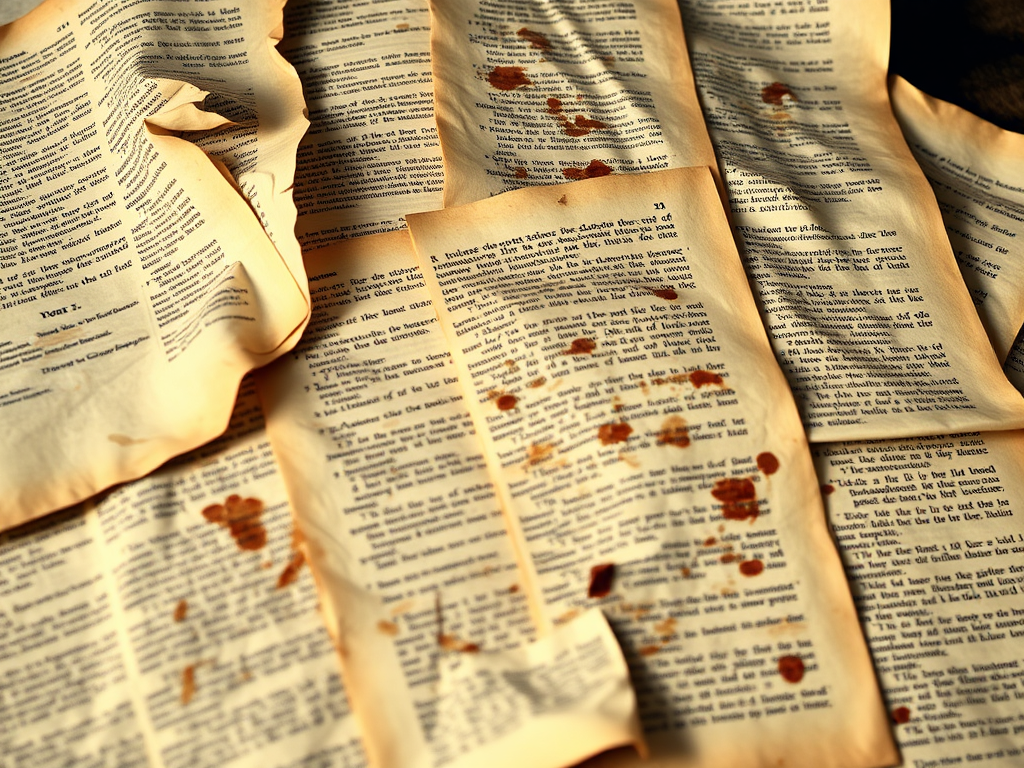
A collection of old, wrinkled pages with printed text, some marked with stains, suggesting a history of use and alteration.

When I first walked into that circle of folding chairs, clutching my manuscript like a security blanket, I had no idea how transformative the experience would be for my development as a writer. I thought I had it all figured out—after all, wasn’t writing just about pouring words onto paper? The more elaborate, the better?

One piece of feedback has stayed with me ever since: “Show, don’t tell.” At first, I was puzzled by this advice. What did that mean? My writing style involved throwing in everything but the kitchen sink. I reveled in immense descriptive detail and thought more was not just better, but the goal. Every sunset had to be “magnificent,” “breathtaking,” and every character’s emotion explicitly stated rather than demonstrated through action or dialogue.

I recall the moment the concept clicked. Instead of writing “Alicia was nervous,” I learned to show her fidgeting with the dimestore wedding ring, her voice catching mid-sentence, beads of perspiration forming across smooth blemished skin despite the cool air. The difference was night and day. Now, my readers could experience Alicia’s anxiety rather than simply being told about it.

This simply piece of advice not only transformed individual scenes, but my entire understanding of what good writing could accomplish. The art of story telling is an invitation, not a lecture. It should draw readers into experiences instead of merely informing them about events. 

I like to think I’ve turned from my wicked writing ways. Although I still battle one persistent habit that threatens to derail every writing session: the urge to edit while I write. 

Some old tendencies die hard—or not at all.

Putting Down the Metaphorical Red Pen

This internal editor remains my most formidable opponent. Picture this: I’m in the middle of what feels like a breakthrough scene, fingers flying across the keyboard, when suddenly that critical voice pipes up. “That sentence is clunky,” it whispers. “That word choice is terrible. Fix it now before you forget.”

My mind races faster than I can type, faster than I can think clearly. Ideas pile up like cars in a traffic jam while I’m stuck polishing a single paragraph to perfection, only to obsess over it hours later. It’s maddening. I’ll spend twenty minutes perfecting the opening sentence of a chapter, only to realize I’ve completely lost track of where the story was heading.

One thing that sharing taught me in the early years of Write Club was that first drafts are meant to be messy. They’re supposed to be imperfect, rushed, and full of placeholder phrases like “insert better description here.” The magic happens in revision, not in the initial pouring of raw creativity energy onto the page.

Yet knowing this intellectually and putting it into practice are two entirely different challenges. Even now, as I write this very sentence, I can feel the urge to go back and tinker with the previous paragraph. It’s an addiction of sorts.

The Liberation of Imperfection

Slowly, I’m learning to embrace what I call “productive messiness.” Some days, I force myself to write with my monitor brightness turned down so low I can barely see the words. Other times, I’ll set a timer and refuse to use the backspace key until it rings. These techniques sound ridiculous, but they’ve helped me push past the paralysis of perfectionism.

The most profound lesson from my writing group experience wasn’t just about showing versus telling—it was about trusting the process. Trust that the story will find its shape. Trust that awkward first drafts can and with some effort will become polished prose. Trust that sometimes the best writing emerges when we release control.

The journey from that nervous newcomer clutching her manuscript to someone who can actually finish a story has been anything but linear. There are still days when I catch myself editing the same sentence for the tenth time, days when “show, don’t tell” feels like an impossible mountain to climb.

But there are also days when the words flow like water, when scenes come alive on the page, when I can feel readers leaning in because they’re not just reading about characters—they’re experiencing the story alongside them. Those are the days that make every frustrating writing session worth it.

The red pen will always be there, waiting to interrupt the creative flow. The key is learning when to pick it up—and more importantly, when to set it down and just let the story unfold.

How has famous word ‘Show, don’t tell’ impacted your writing journey? Is it something you follow? Or dismiss as antiquated approach to writing? The Weirdo wants to know!