Flying Blind: A Pantser’s Thoughts

There’s a moment in every writer’s journey when they have to choose between control and surrender. When faced with this conundrum, do you grip the steering wheel tighter? Or do you slide over to the passenger seat and see where the ride takes you?

For me, that choice came about 1,500 words into what I thought would be a simple, cheesy romance posted for free on Inkitt. Little did I know, my characters had other plans—even the ones that had yet to make their presence known.

I have a confession: I am a pantser. Yep. I go into every story flying blind. I start with a character, a problem, and often absolutely no direction. But I don’t panic. I let the characters decide where to take me.

When I write, I like to think of myself as a scribe—but a scribe with unprecedented access to the characters’ inner thoughts, secrets, desires, and untold history. Nothing is hidden from me.

Now, this “flying blind” approach isn’t without challenges. Sometimes I hit a wall, and not for the reasons you might initially expect.

With Taming Armand, I hit a wall when the story’s direction completely shifted. I initially jumped on Inkitt intending to write a cutesy love story—something a little erotic and, well… cheesy. But around 1,500 words in, the characters hijacked my plans. After chapter one, the secret history of how Armand’s father became alpha and the complex dynamics of one-sided sibling rivalry took over, kicking me out of the driver’s seat. I was no longer controlling what played on the radio.

I found myself writing Taming Armand thinking, “Wow, I didn’t expect it to go this way,” or clutching my pearls at scenarios that unfolded naturally as I continued writing. It was no longer my story—it belonged to Armand, Amelia, Maximillian, and the rest. I, the scribe, had moved to the periphery, becoming merely a spectator who wanted to record everything I’d seen and heard.

Now, I’m not prejudiced against planning. I see the merits in outlining, but as someone who has tried to plan stories, I have to say it’s truly not for me. What was supposed to be a simple outline quickly ballooned into twenty pages of actual story. During that planning exercise, the little bit I did outline was never referenced (honestly, I think I lost it entirely).

Then there was the time I sat down to write a story with a specific ending in mind—something happy. I wanted to step outside my comfort zone and write something, well… uplifting. Instead, the character took me down a dark but humorous path of murder, flaying, and repressed sexual desires. Trust me, I didn’t see any of that coming, at least not for this particular story.

It was with this story that I really evaluated what type of writer I was and am. More importantly, it gave me the courage to embrace who I am as a writer. I don’t write with outlines. An idea comes to me from the ether, I grab hold of it, and let it lead me wherever it wants to go. In simpler, less fluffy terms: I’ve accepted that most writing advice articles aren’t very useful to me because of my approach to storytelling. I’ve learned not to bend myself to fit what a writer is “supposed to do” or how they’re “supposed to approach” story or character development. I’ve learned not to throw the baby out with the bathwater, so to speak.

Do I think my writing life would be easier if I planned? Probably. I’d likely have a higher chance of meeting writing deadlines. But flying blind is where I’m most comfortable, and I feel I do my best work. I’m a better writer when I sit down with no expectations other than getting started. After that first line, the characters take over, and I let them run wild.

Are you a planner or a pantser? Or do you prefer a mixture of both?

The Weirdo wants to know!

Indie Publishing Expectations versus Reality- Part 3: The Editing Gauntlet

This is Part 3 of the “Indie Publishing Expectations vs. Reality” series. Be sure to check out Part 1: Book Covers and Part 2: Knowing the Difference Between Writing Alone and Going It Alone of the series.

I continue with this series on indie publishing, and tackle what I would consider one of the harder if not hardest aspects of writing—one that we’ve all either 1) struggled with, 2) thoroughly enjoyed, 3) hired someone else to tackle that messy piece, or 4) pointed two fingers (I think you know which ones) at the editing process and hit the publish button.

However you handle the arduous process of editing, I would highly encourage you to avoid number four at all costs. Even if you’re averse to the editing process or just anxious to get something published, I would advise—and beg—please give it at the bare minimum a once-over.

I cannot tell you have many fan fiction pieces and even some books that I’ve read where it was evident no one edited a darn thing.

I digress.

I remember the moment I typed “THE END” on the first manuscript I ever completed. The euphoria was intoxicating. I’d done it—I’d written a book! Finally. That one word summed up the initial four years of my path to publication.

In my mind, the hardest part was over, and in about one week (gross underestimation by the way) I would have it published. Only thing left to do was get a banging cover a quick pass through and BAM! I’d be holding my first book.

Now, I’ll jump into my battle with editing.

The Rush to Publish

The book was written and I was anxious to get it out and have copies ready for the 2024 Birmingham Noir at the Bar. All of the other authors had a book either out or coming out, and I needed one out too. (I will interject here, it is a bad, horrible idea to compare yourself to other authors-period! That is the quickest way to end up at depression’d door. Just trust me on this one).

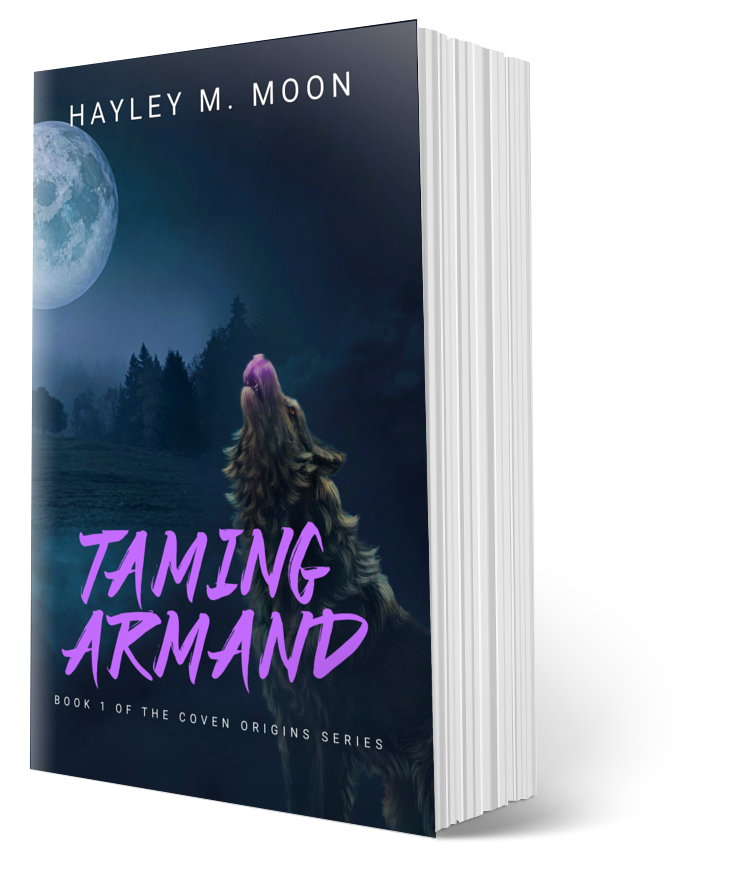
Book cover for 'Taming Armand' by Hayley M. Moon, featuring a wolf under a full moon with a dark forest background.

That was over a year ago, and I have learned a tremendous amount since then. I will admit that with my first novel (Taming Armand Book 1 of the Coven Origins Series), it only went through one—yes, I will repeat that—one round of major edits, and those were done by… me.

Yep. If you’re a writer, teacher, blogger, etc., then I’m sure you chuckled and probably had to do a quick re-read. But no, your eyes are not deceiving you. I didn’t realize how much of a horror that book was until it was published.

If you’re new to indie publishing, let me save you some heartache: your first draft isn’t your book. Not even close. It’s the raw material your book will eventually be carved from. Understanding this distinction—and the editing gauntlet that transforms one into the other—might be the most important reality check you’ll face as an indie author. That was the case for me.

With Taming Armand, it was and still is my baby. It was the first testament that I could do it—that I had started carving away at my dream of becoming a bestselling author. It wasn’t until Taming Armand had been on the market and I had that first copy in my hands and started to read it that I began to understand where I went wrong—and I had gone wrong way before I even completed the manuscript.

I Was a Victim of the First Draft Fantasy

Even before I began to take my writing seriously, I had a romanticized view of the writing process with little to no thought given to the editing process. But what little thought I did give to editing was something like this:

  1. Start the book, finish the book. Celebrate.
  2. Take a brief breather. Read through what you have written. Fix the obvious typos and sentence structure.
  3. Adjust a few sentences for flow. Maybe even add a few here and there to spice things up a bit.
  4. Take another breather. Proofread it yourself. Send to a proofreader for final polish (ended up not doing this because I was in a rush to GET IT OUT!).
  5. Add the finishing touches and voilà! Sit back and watch the five-star reviews (and the royalties) roll in!
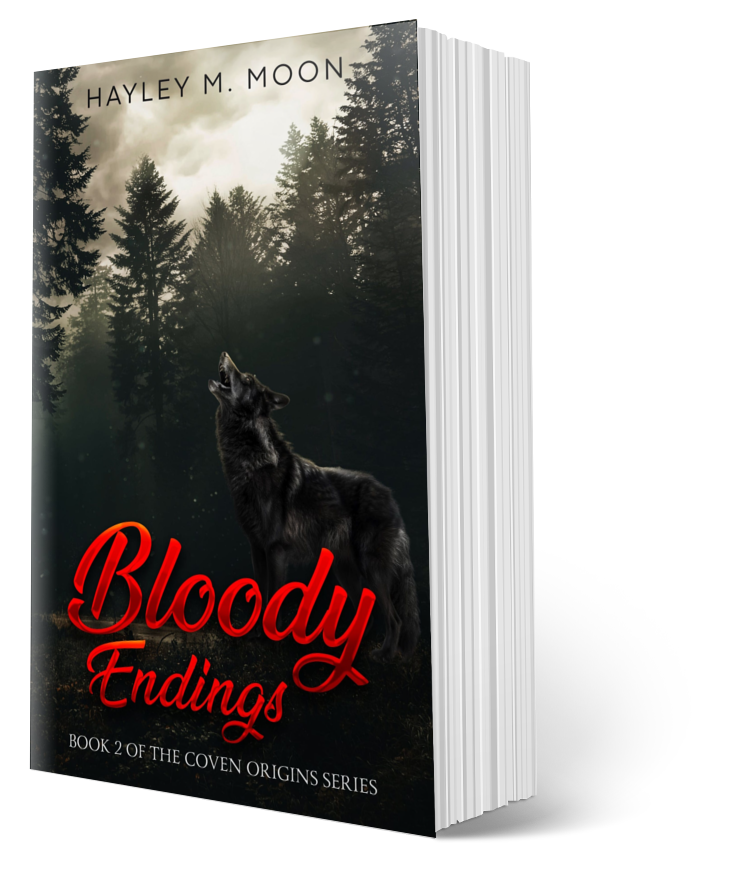
A book cover for 'Bloody Endings', Book 2 of the Coven Origins Series by Hayley M. Moon, featuring a dark forest backdrop and a howling wolf.

I thought editing was like washing a car—a quick rinse to make something good look shiny and new. I had no idea with Bloody Endings: Book 2 of the Coven Origins Series that I was about to enter what I would call “the editing gauntlet”—a grueling but essential process that would completely transform my work into a final form that I was very proud of.

Learning from Mistakes

Several months after Taming Armand was on the market, it had to undergo some serious rework. The first release was what it looks like when you rush to publish—when you release your baby into the world before she or he is ready. I was sure not to repeat that with the second one.

Going into manuscript two, the first draft fantasy was over and I went in knowing there was some seriousness that needed to be taken with not just the writing but the editing portion as well.

Book two underwent multiple rounds of edits but I still felt like more could have been done and at some point I had to call it or else the plot would have been lost.

Another difference between book one and book two was I actually took joy in the entire process. I was able to give the attention to book 2 that frankly I should have given to book one. I outsourced what I didn’t know how to do. I hired someone for the cover. I hired an editor and a beta reader.

What I will say in a nutshell about the editing process is that it’s tough. It’s necessary, and it is one process that no writer should go through alone. After the first pass-through by you, get someone else (I would recommend a professional—yes, indie publishing can be a bit pricey, but I learned to cut corners where possible and budget accordingly).

Your Turn

What are some mistakes you have made during the editing portion of your manuscript? Did you rush it? Put both middle fingers up to the process altogether? Or were you blessed to have a team to help guide you through the editing trenches?

Sound off in the comments—the Weirdo wants to know.

Until next time!

Indie Publishing Part 2: Expectations versus Reality – Knowing the Difference Between Writing Alone and Going It Alone

When I first decided to become an author, I thought I understood what I was signing up for and that it would be fun, and in no time I would be rich!

I’d write my book in solitude (which is something that appealed to me. The lonely genius burning the midnight oil with a beloved pet as their only companion has been something that I have inspired to for a long time. (Haven’t decided whether this is an unhealthy aspiration or not but I digress.)

I thought, “I’ll publish the book myself—how hard could it be?” The plan was simple: build my author career on my own terms and, most importantly, maintain control over my own destiny. After all, who doesn’t crave that sense of control, or at least the comforting illusion of it?

I was ready to embrace what I imagined would be the writer’s life: peaceful isolation paired with creative independence. Little did I know what lay ahead.

What I didn’t realize was that there’s a massive difference between “writing alone” and “going it alone”. I believe as an indie authors and/or publishers this is something we all contend with at some point on the journey. Confusing the two nearly derailed my entire writing journey.

Writing Alone: Beautiful Solitude

Writing alone is exactly what it sounds like—the quiet, focused act of putting words on the page. It’s you, your thoughts, and the story unfolding in your mind. This part of indie publishing lived up to every expectation I had. There was pure creative flow. There were no meetings, no compromise, no committee decision about character motivations and no debates on whether is this or that too much.

I had complete control.

I decide when my protagonist and antagonists speak. I shape the world and whether a plot twist stays or goes. Then there’s the flexible schedule. Whether I write at 5am or midnight, in bed or at the local overpriced coffee shop is of no one’s concern but my own.

Mostly importantly there are no deadlines, except the ones that I set. Then there’s the authentic voice; the story emerges exactly as it has been envisioned without outside influence (which can be for the good or the bad; at times a fresh set of eyes are helpful, I am willing to admit).

This solitude isn’t just pleasant—it’s essential. The best writing happens in that quiet space where you can hear your characters’ voices and feel the rhythm of your prose. I protect this time fiercely, and it remains my favorite part of the entire writing journey.

But here’s the thing about illusions, especially the beautiful ones, is that it lures you in and before you know it the hooks are embedded deep.

Going It Alone: The Isolation Trap

Now here’s where expectations and reality collided. I thought the entire indie publishing journey would be this peaceful, solitary experience. I thought the process would be ordered and all I had to do was hit each step along the way and end up at this fabulous destination. I imagined myself as a lone wolf, handling everything from manuscript to marketing with quiet confidence and complete self-reliance.

The reality? Going it completely alone is not just lonely—it’s counterproductive and dare I say, devastating.

The Learning Curve

When you go it alone, every mistake becomes a costly lesson learned the hard way:

– I spent a week playing around on BookBrush, designing a cover that looked cute, artistic but didn’t signal the urban fantasy genre.

-My back cover blurb was lacking.

-I chose keywords based on what I thought sounded impressive, not what readers actually searched for when looking for books.

Each of these mistakes could have been avoided with input from other indie authors and publishers who’d already navigated these waters.

Lesson learned.

I now have a tribe (albeit small) of writers and authors that have undergone a similar journey or that have taken a different path (more traditional route) or write purely to submit to anthologies.

So, I want to know, can you relate?