Indie Publishing Reality versus Expectations – Part 6: Marketing

How I Learned to Stop Dreaming and Start Hustling

The book is written, cover design is done and that bad boy is published. Great sense of accomplishment. Check. Now, what’s next? Short answer…selling. In order to sell you have to market your book. Honestly, marketing and selling Taming Armand and Bloody Endings along with building a solid following has been harder than actually writing the books. Sweating it out over the keys is the easy part. Once you hit publish the real work starts.
An animated alien character working at a desk, typing on a computer keyboard amidst papers and a calculator, with shelves of books in the background.

I will go into this blog with a note to the reader. These are all actions that I have recently begun to undertake. As a green as spinach author (with the first book, I hope by now that I at least have a little seasoning, although still a bit bland, LOL) I thought if I publish the book they will come. My writing alone will bring the reader to the yard so to speak.

Arrogantly I thought I blast it out once at the onset and the buyers will come. I would gain a mass following, quit the rat race and write full time in a surf shack in Hawaii. Hmmm…not with the previous strategy which was no strategy.

Hopefully, this blog will help you and continue to aid me in this publishing journey.

I was two books in when I thought ‘hey, maybe I should market my books to increase sells.’ If you laughed, I assure you we have no qualms. At this stage of the indie publishing game, it’s very intuitive to think how do I market? How do I get my book or story out there? How do I build an email list? These were not questions that came naturally to me.

The Marketing Reality: It’s a Marathon, not a sprint.  

Here’s the thing nobody tells you: marketing your indie book isn’t a one-and-done deal. It’s an ongoing relationship you build with your readers, one awkward social media post at a time. But don’t worry – we’re all figuring it out together. Your lack of sells doesn’t mean you’re a bad writer, it’s only means no one knows your product exists, and you as the producer of that product have to make people aware or else they don’t buy. 
A cartoonish, alien-like character with large expressive eyes and a pinkish-purple skin tone, running energetically on a racetrack surrounded by palm trees and cheering banners.
  1. Start With Your Author Platform

Before you even think about paid ads get your foundation solid. Spend a little time and build an author website. Even a simple one-page site with your bio, books, and contact info beats having nothing. It gives people someone to go to find you.

You can do this for free. Now if you want to get fancy and have the website as your name or domain of your choosing you will have to pay, but if the budget is tight I would suggest you go with the free option. Trust me no one (aside from you) will care that your website name has something attached for instance .wordpress or the platform of your choosing. 

2. Choose 2-3 social media platforms max.

Two to three social media platforms are recommended but I would say choose the number of platforms that you will realistically frequently update. If you hate a particular platform don’t use it. Although we are conducting business we still want to have a little fun and at the very least enjoy the content we make and share. Pick platforms where your readers actually hang out.

Social Media That Doesn’t Suck Your Soul

  • BookTok/TikTok: Great for romance, fantasy, YA
  • Instagram: Visual storytelling, behind-the-scenes content
  • Facebook: Still huge for connecting with readers, especially in genre groups
  • Twitter/X: Good for connecting with other authors and industry folks

TIP: Share your writing process, not just “buy my book” posts. People love behind-the-scenes content – show your messy desk, your coffee addiction, your cat interrupting your writing sessions.

Highlight: Don’t spread yourself thin trying to be everywhere at once. This was a mistake I made and it only lead to burn out and inconsistencies all around.

3. Start collecting emails from day one.
An abstract illustration of a person sitting at a desk with a laptop, surrounded by floating email envelopes, conveying a sense of digital communication and marketing.

My email list is in-progress. It can be difficult asking people to provide their emails. It seems naughty. Or we ignore the opportunity to collect that valuable and key piece of information. But it doesn’t have to be awkward nor hard. Use a free service like Mailchimp or ConvertKit to capture reader interest.

The Power of the Email List (Yes, Really)

I know, I know – email lists sound about as exciting as watching paint dry. But here’s the truth: social media platforms can disappear or change their algorithms overnight. Your email list? That’s yours forever.

Quick email list building tips:

  • Offer a free short story or chapter as a “reader magnet”
  • Include signup links in the back of your books
  • Mention your newsletter in every social media bio

4. Reviews: The Holy Grail (And How to Get Them)

Reviews are social proof that your book doesn’t completely suck. I am in need of more reviews I’m sure you are too; here’s some ways to get some or to get more.

  • Ask family and friends to leave honest reviews (but follow platform guidelines)
  • Join review exchange groups with other indie authors
  • Send advance reader copies (ARCs) to book bloggers and BookTubers
  • Follow up with readers: Include a gentle request for reviews in your book’s back matter

5. Network Like Your Career Depends on It (Because It Does)

The indie author community is incredibly supportive once you find your tribe. It is a bit ironic that what we do for the most part is a solo endeavor, but all the other parts of writing does require some interaction with community. Nobody understands nor will listen to you moan and groan about editing and cover designs like a fellow author. Trust me on this one. I would suggest:

  • Join Facebook groups for your genre
  • Attend virtual book events and author conferences
  • Collaborate with other authors: Cross-promotion, anthology submissions, guest blog posts
  • Support other indie authors: Like, share, and review their work – it often comes back around

6.Take it Easy on the Pockets

You don’t need a Hollywood budget to market effectively. Keep it simple in the early stages.
An illustrated array of items labeled 'Budget Friendly,' featuring various containers, bags, and household objects, set against a bright background.

Free or Cheap Options:

  • BookFunnel and StoryOrigin promotions: Group giveaways and newsletter swaps
  • Genre-specific Facebook groups: Share when allowed, but engage genuinely first
  • Local opportunities: Library events, book clubs, writing groups
  • Podcast guesting: Many book podcasts are always looking for author interviews

Now only you can decide when and if you need to spend money on marketing. When you’re ready to spend a little here are some helpful hints:

  • BookBub Featured Deals: The gold standard, but competitive
  • Amazon ads: Start small ($5-10/day) and learn as you go
  • Newsletter swaps: Pay to be featured in other authors’ newsletters
  • Book promotion sites: Bargain Booksy, Robin Reads, Fussy Librarian

### Track What Works (And Ditch What Doesn’t)

Keep it simple but keep track:

  • Which social media posts get the most engagement?
  • Where are your sales coming from?
  • What promotional activities actually move the needle?

Use free tools like Google Analytics for your website and the built-in insights on social platforms to see what’s working.

The Long Game Mindset

Marketing your indie books isn’t about finding that one magic trick that makes you an overnight sensation. It’s about consistently showing up, building genuine relationships with readers, and slowly but surely growing your audience.

Some months you’ll sell three books. Some months you might sell thirty. Both are wins when you’re building something from scratch.

Remember: every bestselling author started exactly where you are now – with one book and a whole lot of hope. The difference between those who make it and those who don’t? They kept going, kept learning, and kept connecting with readers.

Be kind to yourself. If something doesn’t work adjust and try again.

Now stop reading about marketing and go do some actual marketing. Your books aren’t going to promote themselves (unfortunately).

What marketing strategies have worked best for you? What’s been your biggest challenge? Drop a comment below – the Weirdo wants to know!

Indie Publishing Expectations versus Reality- Part 3: The Editing Gauntlet

This is Part 3 of the “Indie Publishing Expectations vs. Reality” series. Be sure to check out Part 1: Book Covers and Part 2: Knowing the Difference Between Writing Alone and Going It Alone of the series.

I continue with this series on indie publishing, and tackle what I would consider one of the harder if not hardest aspects of writing—one that we’ve all either 1) struggled with, 2) thoroughly enjoyed, 3) hired someone else to tackle that messy piece, or 4) pointed two fingers (I think you know which ones) at the editing process and hit the publish button.

However you handle the arduous process of editing, I would highly encourage you to avoid number four at all costs. Even if you’re averse to the editing process or just anxious to get something published, I would advise—and beg—please give it at the bare minimum a once-over.

I cannot tell you have many fan fiction pieces and even some books that I’ve read where it was evident no one edited a darn thing.

I digress.

I remember the moment I typed “THE END” on the first manuscript I ever completed. The euphoria was intoxicating. I’d done it—I’d written a book! Finally. That one word summed up the initial four years of my path to publication.

In my mind, the hardest part was over, and in about one week (gross underestimation by the way) I would have it published. Only thing left to do was get a banging cover a quick pass through and BAM! I’d be holding my first book.

Now, I’ll jump into my battle with editing.

The Rush to Publish

The book was written and I was anxious to get it out and have copies ready for the 2024 Birmingham Noir at the Bar. All of the other authors had a book either out or coming out, and I needed one out too. (I will interject here, it is a bad, horrible idea to compare yourself to other authors-period! That is the quickest way to end up at depression’d door. Just trust me on this one).

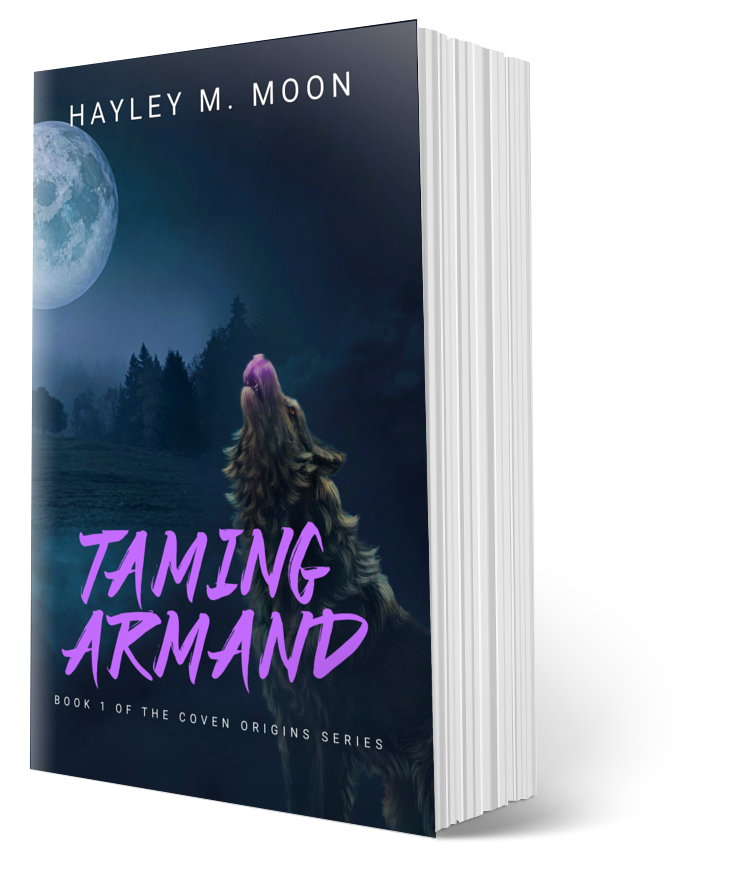
Book cover for 'Taming Armand' by Hayley M. Moon, featuring a wolf under a full moon with a dark forest background.

That was over a year ago, and I have learned a tremendous amount since then. I will admit that with my first novel (Taming Armand Book 1 of the Coven Origins Series), it only went through one—yes, I will repeat that—one round of major edits, and those were done by… me.

Yep. If you’re a writer, teacher, blogger, etc., then I’m sure you chuckled and probably had to do a quick re-read. But no, your eyes are not deceiving you. I didn’t realize how much of a horror that book was until it was published.

If you’re new to indie publishing, let me save you some heartache: your first draft isn’t your book. Not even close. It’s the raw material your book will eventually be carved from. Understanding this distinction—and the editing gauntlet that transforms one into the other—might be the most important reality check you’ll face as an indie author. That was the case for me.

With Taming Armand, it was and still is my baby. It was the first testament that I could do it—that I had started carving away at my dream of becoming a bestselling author. It wasn’t until Taming Armand had been on the market and I had that first copy in my hands and started to read it that I began to understand where I went wrong—and I had gone wrong way before I even completed the manuscript.

I Was a Victim of the First Draft Fantasy

Even before I began to take my writing seriously, I had a romanticized view of the writing process with little to no thought given to the editing process. But what little thought I did give to editing was something like this:

  1. Start the book, finish the book. Celebrate.
  2. Take a brief breather. Read through what you have written. Fix the obvious typos and sentence structure.
  3. Adjust a few sentences for flow. Maybe even add a few here and there to spice things up a bit.
  4. Take another breather. Proofread it yourself. Send to a proofreader for final polish (ended up not doing this because I was in a rush to GET IT OUT!).
  5. Add the finishing touches and voilà! Sit back and watch the five-star reviews (and the royalties) roll in!
A book cover for 'Bloody Endings', Book 2 of the Coven Origins Series by Hayley M. Moon, featuring a dark forest backdrop and a howling wolf.

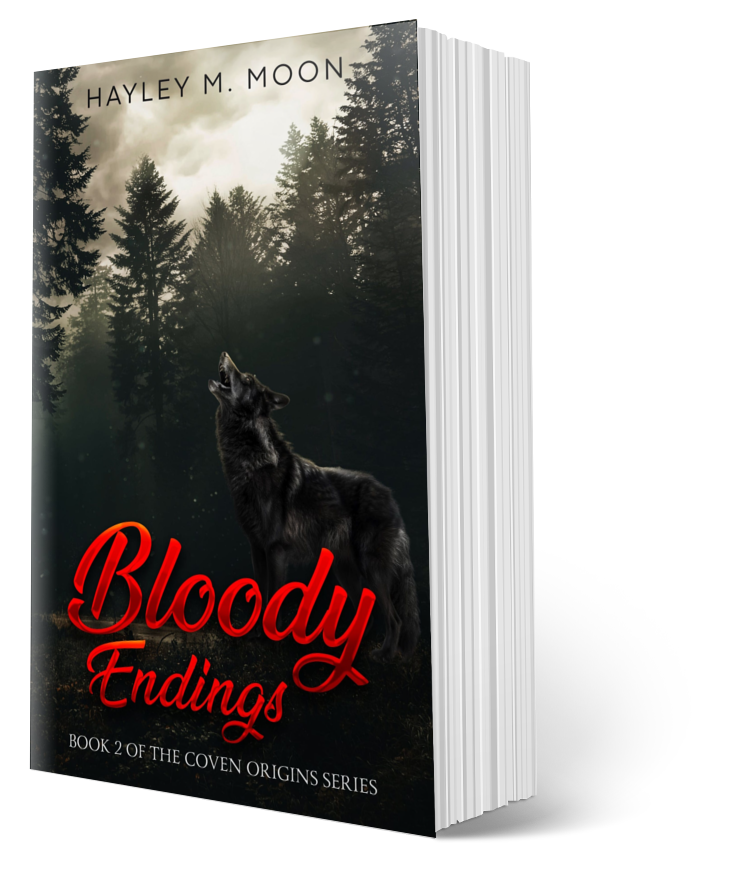
I thought editing was like washing a car—a quick rinse to make something good look shiny and new. I had no idea with Bloody Endings: Book 2 of the Coven Origins Series that I was about to enter what I would call “the editing gauntlet”—a grueling but essential process that would completely transform my work into a final form that I was very proud of.

Learning from Mistakes

Several months after Taming Armand was on the market, it had to undergo some serious rework. The first release was what it looks like when you rush to publish—when you release your baby into the world before she or he is ready. I was sure not to repeat that with the second one.

Going into manuscript two, the first draft fantasy was over and I went in knowing there was some seriousness that needed to be taken with not just the writing but the editing portion as well.

Book two underwent multiple rounds of edits but I still felt like more could have been done and at some point I had to call it or else the plot would have been lost.

Another difference between book one and book two was I actually took joy in the entire process. I was able to give the attention to book 2 that frankly I should have given to book one. I outsourced what I didn’t know how to do. I hired someone for the cover. I hired an editor and a beta reader.

What I will say in a nutshell about the editing process is that it’s tough. It’s necessary, and it is one process that no writer should go through alone. After the first pass-through by you, get someone else (I would recommend a professional—yes, indie publishing can be a bit pricey, but I learned to cut corners where possible and budget accordingly).

Your Turn

What are some mistakes you have made during the editing portion of your manuscript? Did you rush it? Put both middle fingers up to the process altogether? Or were you blessed to have a team to help guide you through the editing trenches?

Sound off in the comments—the Weirdo wants to know.

Until next time!

Indie Publishing Part 1: Expectations versus Reality-Book Covers

This will kick off my new Indie Publishing series where I discuss being an Indie author and what I wish I knew before I got started. This will be the first of a little multi part blog post where I discuss a few aspects of my publishing journey so far.

I went into the publishing industry green-I mean fresh sweet pea green-so of course my views were, to say at a minimum, unrealistic. Naive. Wishful thinking. You get the picture.

I was under the impression the hardest part of the process was, well, writing the book. In my opinion, although it’s not without difficulty, that is the easiest part and one I could do on repeat.

I thought all I had to do was write the book and then everything would easily fall into place and voila! I would be a famous author with royalties pouring in, a pick for Oprah’s book club, and then I could quit my job and tell the man where to stick it! While getting settled into a small cottage with a maze nestled on a lake! LOL!

None of this has come true-at least not yet-and it wasn’t until after Taming Armand was written I realized…wait, that’s not it? There’s still more to do?

Book Covers

Although one of the things I find most enjoying about the publishing process is playing such a huge part in the cover design. Thing about being an indie author is that I have the first and last say on the design-and font. This has also been the part of the process that has caused my anxiety to rear its ugly head on a few occasions.

Let’s start with you can choose anything. A blessing and a curse. Especially for someone that came into the indie publishing game with no idea of what she was doing.

After an hour or two at YouTube University, I learned a little thing about genre specific covers and genre expectations. Going into the process, I never thought about being genre-specific and whether it aligns with what’s hot in that genre at the time of publication. Naively, I thought the only goal of book cover design was to create a pretty, eye-catching cover. But the main goal as an author is to move product! You don’t want your book to get overlooked simply because the cover doesn’t fit genre expectations.

Let’s not start on the font.

Before I outsourced outsource cover design to someone that does it for a living, I gave it three attempts. It was fun, but stressful. Tedious. At times I wasn’t sure on which direction to go, and as for the urban fantasy genre in which Taming Armand and Bloody Endings both fit into with a tinge of paranormal romance, and black magic (just an FYI if you’re into that sort of thing), I thought many of the covers where cheesy.

From first glance at the covers, the books would not be my first choice. Nor did I want my cover to blend in, but I’ve learned in order to standout you have to first fit in.

Now let’s get to the nitty gritty and talk fonts! I didn’t know there were certain fonts that cannot be used because they’re trademarked or registered or whatever. But yeah, it blew my mind!

Also, there are genre specific fonts and these can make or break your cover. Just because a font is pretty doesn’t mean it’s legible. Too much flair then we have entered into romance or high fantasy territory. That’s not a bad thing, but if you write street, gritty crime- then you may find yourself in a bit of a pickle.

So my expectations for book cover design was that it would be fun. As for font design and selection, I had no expectations because it didn’t even register that thought had to be put into something, that prior to venture into publishing, I thought was insignificant, mundane.

Indie publishing has given me a new respect for publishing houses and small presses. It takes a lot of oil to get the machine that is a book ready. There are a lot of little pieces and players (if you are fortunate to have a team) working together to create the finished product waiting to be chosen on a shelf near you.